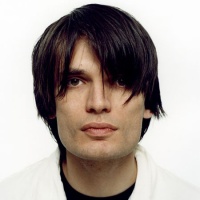
Jonathan Richard Guy Greenwood (born 5 November 1971) is an English musician and the lead guitarist of the rock band Radiohead. He has also composed numerous film scores. He has been named one of the greatest guitarists by publications including Rolling Stone.
Greenwood formed Radiohead at school with his elder brother, Colin. Their debut single, "Creep" (1992), featured Greenwood's aggressive guitar work. He described his role in Radiohead as an arranger, helping transform Thom Yorke's demos into finished songs. Radiohead have sold more than 30 million albums, and Greenwood was inducted into the Rock and Roll Hall of Fame as a member of the band in 2019.
Greenwood is a multi-instrumentalist and a player of the ondes Martenot, an early electronic instrument. He uses electronic techniques such as programming, sampling and looping, and writes music software. The only classically trained member of Radiohead, Greenwood has composed for orchestras including the London Contemporary Orchestra and the BBC Concert Orchestra, and his arrangements feature on Radiohead records. He has collaborated with Middle Eastern musicians including the Israeli songwriters Shye Ben Tzur and Dudu Tassa. In 2021, Greenwood debuted a new band, the Smile, with Yorke and the drummer Tom Skinner.
Greenwood released his first solo work, the soundtrack for the film Bodysong, in 2003. In 2007, he scored There Will Be Blood, the first of several collaborations with the director Paul Thomas Anderson. In 2018, he was nominated for an Academy Award for his score for Anderson's Phantom Thread. He was nominated again for his score for The Power of the Dog (2021), directed by Jane Campion, and his score for Anderson's One Battle After Another (2025). Greenwood also scored the Lynne Ramsay films We Need to Talk About Kevin (2011) and You Were Never Really Here (2017).
Early life
Jonny Greenwood was born on 5 November 1971 in Oxford, England. His brother, the Radiohead bassist Colin Greenwood, is two years older. Their father served in the British Army as a bomb disposal expert. The Greenwood family has historical ties to the Communist Party of Great Britain and the socialist Fabian Society.
When he was a child, Greenwood's family would listen to a small number of cassettes in their car, including Mozart's horn concertos, the musicals Flower Drum Song and My Fair Lady, and cover versions of Simon & Garfunkel songs. When the cassettes were not playing, Greenwood would listen to the noise of the engine and try to recall every detail of the music. He credited his older siblings with exposing him to rock bands such as the Beat and New Order. The first gig Greenwood attended was the Fall on their 1988 Frenz Experiment tour, which he found "overwhelming".
The Greenwood brothers attended the private boys' school Abingdon. The Abingdon director of music, Michael Stinton, recalled Jonny as a "charming student" and "committed musician" who would spend as much time in the music department as possible. Greenwood's first instrument was a recorder given to him at age four or five. He played baroque music in recorder groups as a teenager, and continued to play into adulthood. He played the viola in the Thames Vale youth orchestra, which he described as a formative experience: "I'd been in school orchestras and never seen the point. But in Thames Vale I was suddenly with all these 18-year-olds who could actually play in tune. I remember thinking: 'Ah, that's what an orchestra is supposed to sound like!'" Greenwood also spent time programming, experimenting with BASIC and simple machine code to make computer games. According to Greenwood, "The closer I got to the bare bones of the computer, the more exciting I found it."
On a Friday
At Abingdon, the Greenwood brothers formed a band, On a Friday, with the singer Thom Yorke, the guitarist Ed O'Brien and the drummer Philip Selway. Jonny, the youngest, was three school years below Yorke and Colin and the last to join. He was previously in another band, Illiterate Hands, with Matt Hawksworth, Simon Newton, Ben Kendrick, Nigel Powell and Yorke's brother, Andy.
Greenwood initially played harmonica and keyboards for On a Friday. As they had fired their previous keyboardist for playing too loudly, Greenwood spent his first months playing with his keyboard turned off. No one in the band realised, and Yorke told him he added an "interesting texture". According to Greenwood, "I'd go home in the evening and work out how to actually play chords, and cautiously, over the next few months, I would start turning this keyboard up." According to Selway, at On a Friday's first gig, in Oxford’s Jericho Tavern, Greenwood sat on the stage with a harmonica, "waiting for his big moment to arrive". He eventually became the lead guitarist.
Although the other members of On a Friday had left Abingdon by 1987 to attend university, they continued to rehearse on weekends and holidays. Greenwood studied music at A Level, including chorale harmonisation.
Career
1991–1992: Pablo Honey
In 1991, the members of On a Friday regrouped in Oxford, sharing a house on the corner of Magdalen Road and Ridgefield Road. Greenwood played harmonica on the 1992 Blind Mr. Jones single "Crazy Jazz". He enrolled at Oxford Brookes University to study psychology and music, but left after his first term after On a Friday signed a record contract deal with EMI. Greenwood said he had been "headed for the back of the viola section at some minor orchestra".
The band changed their name to Radiohead and released their first album, Pablo Honey, in 1993. Radiohead found early success with their debut single, "Creep", released in 1992. According to Rolling Stone, "It was Greenwood's gnashing noise blasts that marked Radiohead as more than just another mopey band ... An early indicator of his crucial role in pushing his band forward." The Independent wrote that it was "the kind of transformative moment that has become his signature contribution to the Radiohead style".
1995–1999: The Bends and OK Computer
Radiohead's second album, The Bends (1995), brought them significant critical attention. Greenwood said it had been a "turning point" for Radiohead: "It started appearing in people's [best of] polls for the end of the year. That's when it started to feel like we made the right choice about being a band." On tour, Greenwood damaged his hearing and wore protective ear shields for some performances.
Radiohead's third album, OK Computer (1997), achieved acclaim, showcasing Greenwood's lead guitar work on songs such as "Paranoid Android". For "Climbing up the Walls", Greenwood wrote a part for 16 stringed instruments playing quarter tones apart, inspired by the Polish composer Krzysztof Penderecki.
For the soundtrack of the 1998 film Velvet Goldmine, Greenwood, Yorke, Andy Mackay of Roxy Music and Bernard Butler of Suede formed a band, the Venus in Furs, and covered three Roxy Music songs. Greenwood played harmonica on "Platform Blues" and "Billie" on Pavement's final album, Terror Twilight (1999).
2000–2003: Kid A, Amnesiac and Hail to the Thief
Radiohead's albums Kid A (2000) and Amnesiac (2001) marked a dramatic change in sound, incorporating influences from electronica, classical music, jazz and krautrock. Greenwood employed a modular synthesiser to build the drum machine rhythm of "Idioteque", and played ondes Martenot, an early electronic instrument similar to a theremin, on several tracks.
For "How to Disappear Completely", Greenwood composed a string section by multitracking his ondes Martenot playing. According to Radiohead's producer, Nigel Godrich, when the string players saw Greenwood's score "they all just sort of burst into giggles, because they couldn't do what he'd written, because it was impossible—or impossible for them, anyway". The orchestra leader, John Lubbock, encouraged the musicians to experiment and work with Greenwood's "naive" ideas. Greenwood also arranged strings for the Amnesiac songs "Pyramid Song" and "Dollars and Cents".
Greenwood played guitar on Bryan Ferry's 2002 album Frantic. For Radiohead's sixth album, Hail to the Thief (2003), Greenwood began using the music programming language Max to sample and manipulate the band's playing. After having used effects pedals heavily on previous albums, he challenged himself to create interesting guitar parts without effects.
2003–2006: Bodysong and first orchestral work
In 2003, Greenwood released his first solo work, the soundtrack for the documentary film Bodysong. It incorporates guitar, jazz, and classical music. Greenwood played instruments such as the ondes Martenot, banjo, glass harmonica and vocoder, and employed the Gerard Presencer jazz quartet. In 2004, Greenwood and Yorke contributed to the Band Aid 20 single "Do They Know It's Christmas?", produced by Godrich.
Greenwood's first work for orchestra, Smear, was premiered by the London Sinfonietta in March 2004. In 2005, Greenwood curated a concert as part of the Ether festival in London at with the London Sinfonietta. It featured a new version of Smear, the new work Piano for Children, and performances of pieces by classical modernist composers. With the orchestra, Greenwood also performed two Radiohead songs with Yorke: "Where Bluebirds Fly" and "Weird Fishes / Arpeggi".
In May 2004, Greenwood was appointed composer-in-residence to the BBC Concert Orchestra. Radiohead's co-manager, Bryce Edge, said Greenwood would use the residency to learn how orchestras work. For the BBC, Greenwood wrote "Popcorn Superhet Receiver" (2005), inspired by radio static and the elaborate, dissonant tone clusters of Penderecki's Threnody to the Victims of Hiroshima (1960). He wrote the piece by recording individual tones on viola, then manipulating and overdubbing them in Pro Tools. For "Popcorn Superhet Receiver", Greenwood was named Composer of the Year by BBC Radio 3.
For the 2005 film Harry Potter and the Goblet of Fire, Greenwood and the Radiohead drummer, Philip Selway, appeared as the wizard rock band Weird Sisters alongside Jarvis Cocker, Steve Mackey, Steven Claydon and Jason Buckle. They recorded three songs for the soundtrack and appeared in the film. Greenwood contributed piano to "The Eraser" from Yorke's debut solo album, The Eraser (2006).
2007–2010: There Will Be Blood and In Rainbows
Greenwood composed the score for the 2007 film There Will Be Blood, directed by Paul Thomas Anderson. The soundtrack won an award at the Critics' Choice Awards and the Best Film Score award in the Evening Standard British Film Awards for 2007. As it contains excerpts from "Popcorn Superhet Receiver", it was ineligible for an Academy Award for Best Original Score. Rolling Stone named There Will Be Blood the best film of the decade and described the score as "a sonic explosion that reinvented what film music could be". In 2016, the film composer Hans Zimmer said the score was "recklessly, crazily beautiful".
In March 2007, Trojan Records released Jonny Greenwood Is the Controller, a compilation album of reggae tracks curated by Greenwood. It features mostly 70s roots and dub tracks from artists including Lee "Scratch" Perry, Joe Gibbs and Linval Thompson. The title references Thompson's track "Dread Are the Controller".
Radiohead released their seventh album, In Rainbows, in October 2007, in a landmark use of the pay-what-you-want model for music sales. Greenwood said Radiohead were responding to the culture of downloading free music, which he likened to the legend of King Canute: "You can't pretend the flood isn't happening." Greenwood wrote the title music for Adam Buxton's 2008 sketch show Meebox, and contributed to the 2009 album Basof Mitraglim Le'Hakol by the Israeli rock musician Dudu Tasaa. Greenwood cowrote Yorke's 2009 single "Feeling Pulled Apart By Horses".
2010–2013: Norwegian Wood and The King of Limbs
In February 2010, Greenwood debuted a new composition, "Doghouse", at the BBC's Maida Vale Studios, written in hotels and dressing rooms while on tour with Radiohead. He expanded "Doghouse" into the score for the Japanese film Norwegian Wood, released later that year. Greenwood and Yorke performed a surprise set at Glastonbury Festival 2010, performing Radiohead and Eraser songs. Greenwood also played guitar on Bryan Ferry's 2010 album Olympia.
Radiohead's recorded their eighth album, The King of Limbs (2011), using sampler software written by Greenwood. By 2011, Radiohead had sold more than 30 million albums. That year, Greenwood scored We Need to Talk About Kevin, directed by Lynne Ramsay, using instruments including a wire-strung harp. With Yorke, he also collaborated with the rapper MF Doom on the track "Retarded Fren".
In 2012, Greenwood composed the score for Anderson's film The Master. That March, Greenwood and the Polish composer Krzysztof Penderecki, one of Greenwood's greatest influences, released an album comprising Penderecki's 1960s compositions Polymorphia and Threnody for the Victims of Hiroshima, Greenwood's "Popcorn Superhet Receiver", and a new work by Greenwood, "48 Responses to Polymorphia".
In the same year, Greenwood accepted a three-month residency with the Australian Chamber Orchestra in Sydney and composed a new piece, "Water". Greenwood, Yorke, and other artists contributed music to The UK Gold, a 2013 documentary about tax avoidance in the UK. The soundtrack was released free in February 2015 through the online audio platform SoundCloud.
2014–2016: Inherent Vice, Junun and A Moon Shaped Pool
Greenwood composed the soundtrack for the Anderson film Inherent Vice (2014). It features a new version of an unreleased Radiohead song, "Spooks", performed by Greenwood and two members of Supergrass. In 2014, Greenwood performed with the London Contemporary Orchestra, performing selections from his soundtracks alongside new compositions. In the same year, Greenwood performed with the Israeli composer Shye Ben Tzur and his band. Greenwood described Ben Tzur's music as "quite celebratory, more like gospel music than anything—except that it's all done to a backing of Indian harmoniums and percussion". He said he would play a "supportive" rather than "solistic" role.
In 2015, Greenwood, Ben Tzur and Godrich recorded an album, Junun, with the Rajasthan Express at Mehrangarh Fort in Rajasthan, India. Greenwood insisted they hire only musicians from Rajasthan and only use string instruments native to the region. Ben Tzur wrote the songs, with Greenwood contributing guitar, bass, keyboards, ondes Martenot and programming. Whereas western music is based on harmonies and chord progressions, Greenwood used North Indian ragas. Greenwood and Godrich said they wanted to avoid the "obsession" with high fidelity in recording world music, and instead hoped to capture the "dirt" and "roughness" of music in India. The recording is the subject of a 2015 documentary, Junun, by Paul Thomas Anderson.
Greenwood contributed string orchestration to Frank Ocean's 2016 albums Endless and Blonde. Radiohead's ninth album, A Moon Shaped Pool, was released in May 2016, featuring strings and choral vocals arranged by Greenwood and performed by the London Contemporary Orchestra. Greenwood, Ben Tzur and the Rajasthan Express were a support act on Radiohead's 2018 Moon Shaped Pool tour.
2017–2020: Phantom Thread and The Power of the Dog
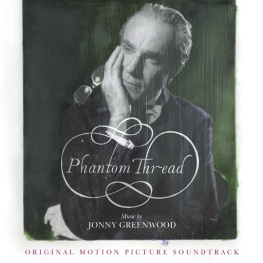
Greenwood wrote the score for Anderson's 2017 film Phantom Thread. It was nominated for an Academy Award and earned Greenwood his sixth Ivor Novello award. Greenwood reunited with Ramsay to score her film You Were Never Really Here, also released in 2017. That August, Yorke and Jonny Greenwood performed a benefit concert in the Marche, Italy, to help restoration efforts following the August 2016 Central Italy earthquake. At the 2019 BBC Proms in London, Greenwood debuted his composition "Horror Vacui" for solo violin and 68 string instruments.
Greenwood was inducted into the Rock and Roll Hall of Fame as a member of Radiohead in March 2019. Greenwood did not attend the event, and told Rolling Stone: "I don't care. Maybe it's a cultural thing that I really don't understand ... It's quite a self-regarding profession anyway. And anything that heightens that just makes me feel even more uncomfortable." In September, Greenwood launched a record label, Octatonic Records, to release contemporary classical music by soloists and small groups he had met as a film composer. In 2021, he expressed uncertainty about releasing further Octatonic records, as the two Octatonic records "seemed to not really connect with anybody". In 2024, Greenwood said he planned to revive Octatonic with a release from the cellist Oliver Coates.
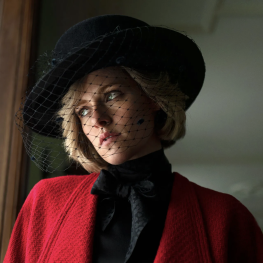
For the soundtrack for The Power of the Dog (2021), Greenwood played the cello in the style of a banjo and recorded a piece for player piano controlled with the software Max. The soundtrack earned Greenwood his second Academy Award nomination. For his soundtrack to Spencer (2021), Greenwood combined Baroque and jazz music, juxtaposing their "rigid" and "colourful" styles. He also contributed cues to Anderson's 2021 film Licorice Pizza.
2021–2023: the Smile and Jarak Qaribak
In 2021, Greenwood debuted a new band, the Smile, with Yorke and the jazz drummer Tom Skinner. Greenwood said the project was a way for him and Yorke to work together during the COVID-19 lockdowns. Pitchfork attributed the Smile to Greenwood's frustration with Radiohead's slow working pace and his desire to release records that are "90 percent as good [that] come out twice as often". The Smile made their surprise debut in a performance streamed by Glastonbury Festival on 22 May, with Greenwood playing guitar and bass.
The Guardian critic Alexis Petridis said the Smile "sound like a simultaneously more skeletal and knottier version of Radiohead", exploring more progressive rock influences with unusual time signatures, complex riffs and "hard-driving" motorik psychedelia. In May 2022, the Smile released their debut album, A Light for Attracting Attention, and began an international tour. Greenwood and Yorke contributed music to the sixth series of the television drama Peaky Blinders, broadcast that year.
Greenwood composed and conducted strings for the Pretenders song "I Think About You Daily", released in June 2023. On 9 June, Greenwood and the Israeli musician Dudu Tassa released Jarak Qaribak, comprising reworkings of Middle Eastern love songs. It was produced by Greenwood and Tassa and mixed by Godrich, and features several Middle Eastern musicians. Greenwood said he and Tassa had "tried to imagine what Kraftwerk would have done if they'd been in Cairo in the 1970s". He denied any intent to make a political point with the album, and said: "I do understand that as soon as you do anything in that part of the world it becomes political ... possibly especially if it's artistic." A European tour for Jarak Qaribak was canceled following the outbreak of the Gaza war in 2023.
2024–present: Wall of Eyes and Cutouts
In January 2024, the Smile released their second album, Wall of Eyes. They began a European tour in March. In May, a drone-based composition by Greenwood for church organ, "X Years of Reverb" — where X is substituted for the age of the building in which it is performed – premiered at the Norfolk and Norwich Festival. The composition is eight hours long and was performed by the organists James McVinnie and Eliza McCarthy playing in shifts using stopwatches. Greenwood composed it after becoming involved in charities to repair churches damaged by an earthquake near his home in Marche, Italy.
On 25 May, Greenwood joined protests in Israel calling for the removal of Prime Minister Benjamin Netanyahu, elections for new leadership, and the release of hostages held by Hamas in Gaza. The next day, he and Tassa performed songs from Jarak Qaribak in Tel Aviv. The performance was criticised by pro-Palestine activists; the Palestinian Campaign for the Academic and Cultural Boycott of Israel called for "peaceful, creative pressure on his band Radiohead to convincingly distance itself from this blatant complicity in the crime of crimes, or face grassroots measures". On 4 June, Greenwood responded in a statement that Israeli artists should not be silenced. He described the project as a group of Middle Eastern musicians "working together across borders" and made no mention of Israel's war on Gaza.
In July, the Smile canceled their upcoming European tour after Greenwood was temporarily hospitalised with a serious infection. In a statement, the Smile said Greenwood had been receiving emergency treatment in an intensive care unit, but was now safe. In October, Greenwood said he was mostly recovered and was focusing on film soundtracks until he was fully well. The Smile's third album, Cutouts, recorded simultaneously with Wall of Eyes, was released that month. Greenwood scored his sixth film for Paul Thomas Anderson, One Battle After Another, released in September 2025. It earned Greenwood his third Academy Award nomination.
In May 2025, Greenwood and Tassa's performances in Bristol and London supporting Jarak Qaribak were canceled following threats to the venues and staff. They released a statement criticising the cancellations as censorship, emphasised the mixed heritage of the performers, and compared the cancellations to the controversy surrounding the hip-hop group Kneecap following their Coachella 2025 performance. In an interview later that year, Yorke said he would not perform in Israel again, while Greenwood disagreed, saying boycotts of Israel empower the government to act as they please. He said he was "ashamed of dragging [his Radiohead bandmates] into this mess", but was not ashamed of working with Arab and Jewish musicians.
In November 2025, Radiohead began a European tour, their first tour in seven years. In February 2026, Greenwood and Anderson released a statement saying the 2026 documentary film Melania contained unauthorised use of Greenwood's Phantom Thread score and that they had asked for its removal. A second album by Greenwood, Ben Tzur and the Rajasthan Express, Ranjha, is set for release in May. It features Greenwood's Smile bandmate Tom Skinner and was produced by the Smile producer Sam Petts-Davies in Greenwood's Oxfordshire studio. The group began writing new music while supporting Radiohead in 2017 and 2018, but work was postponed by the COVID-19 pandemic.